Personalising the bouquet - bouquets for special moments

How do you personalise a bouquet to make it truly special?

Flowers have always symbolised emotions and special moments. Increasingly, however, instead of reaching for ready-made compositions, we choose to personalisation of the bouquetto give it a unique character. That's why it's important to know how to create a composition perfectly suited to the occasion and the taste of the recipient. Check out our tips!

Find inspiration in the recipient's tastes

The first step in personalising a bouquet is to take into account the preferences of the person you are creating it for. What's more, adding a dedication or a card with a personal message will make the gift even more special.

Favourite flowers, colours or style make a huge difference. If you don't know the exact preferences, try to go by personality type, favourite colours or even the way they dress. This will make the bouquet more consistent with the recipient's character.

Learn 4 styles that will help you better identify her/his bouquet preferences.

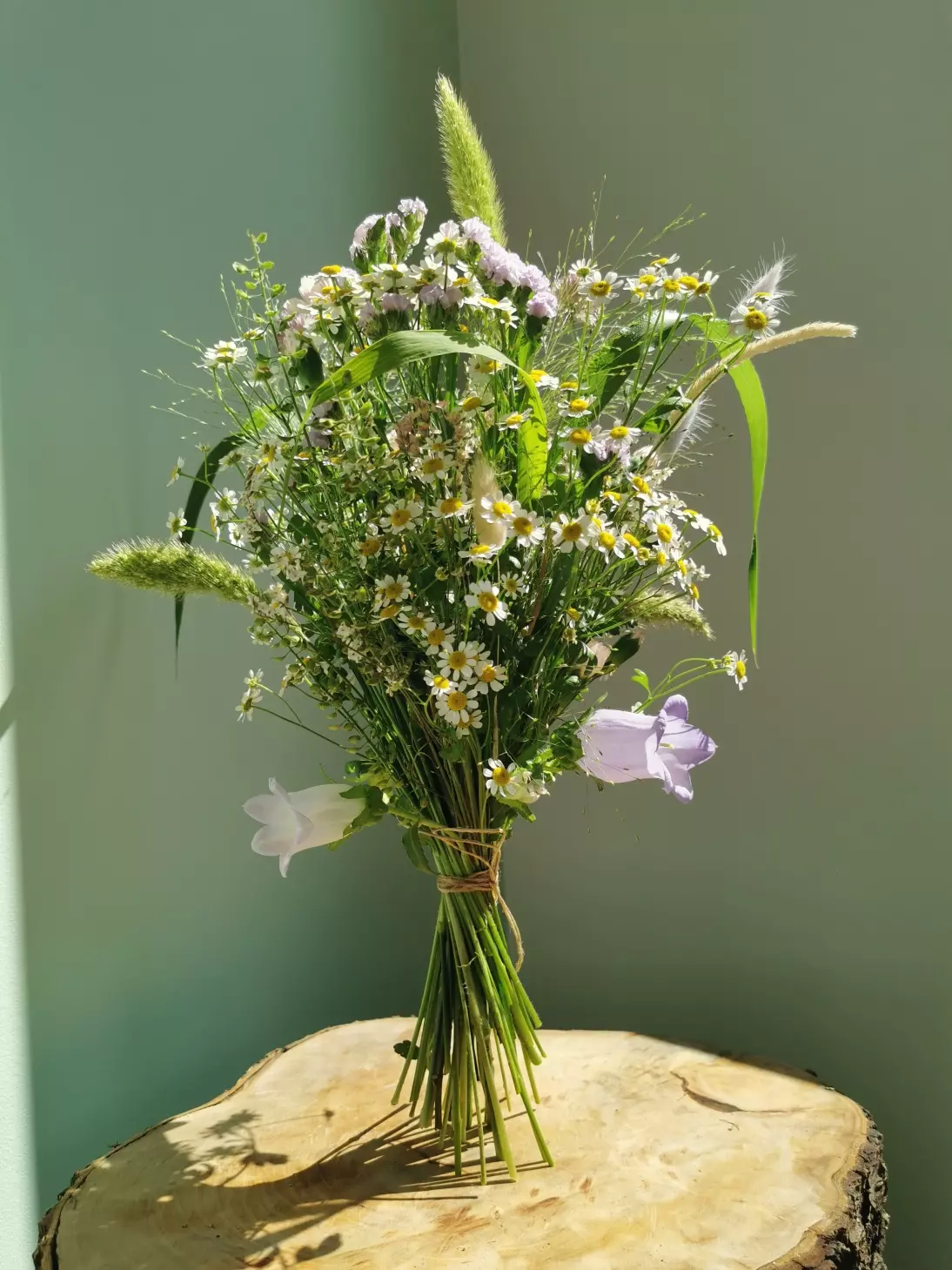
Field-style bouquet

This is the perfect choice for those who appreciate the simplicity and romantic charm of meadow flowers. Such a bouquet brings a cosy, idyllic atmosphere to the interior.

  • Light, loose, irregular form - gives the impression of a bouquet spontaneously picked during a walk in a meadow.
  • Naturalness and lightness - Uses wildflowers that look wild without being overly stylised.
  • Rustic character - The bouquet is often tied with a jute cord or delicate ribbon.
  • A wealth of textures - combines different shapes and sizes of flowers, often complemented by grasses.
  • Pastels or vivid colours - shades of yellow, white, purple, blue, but also warm colours such as orange and red.

Garden-style bouquet

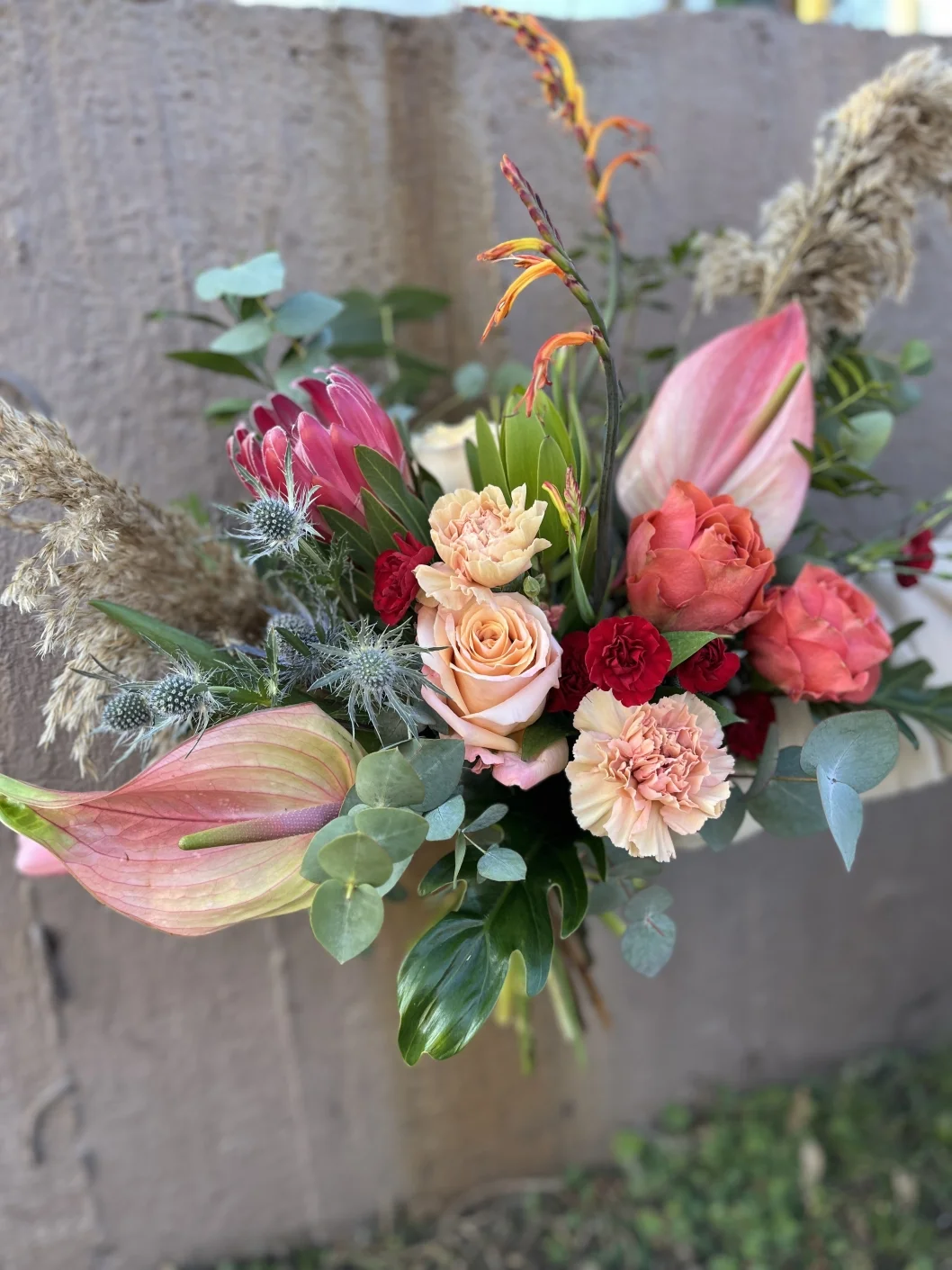
This is for lovers of nature and romantic style. Less wild than a field bouquet, but still full of freedom. Ideal as a gift for no occasion or as an interior decoration for boho and vintage style.

  • Naturalness and freedom - A loose composition inspired by flowers growing in the garden, as if they had just been plucked straight from the flower bed.
  • Variety of flowers available for the season - gladioli, dahlias, peonies, pinks, buttercups, hydrangeas, lavender, eustoma, wild roses or cosmos.
  • Soft and pastel colours - shades of white, pink, purple, blue and green, broken up by warm colours such as peach or yellow.
  • Additions of greenery - Eucalyptus leaves, ferns, herbs (e.g. rosemary, lavender) or ornamental grasses add lightness and volume to the bouquet.
  • Rustic accents - The bouquet is often tied with natural string, lace ribbon or wrapped in kraft paper.

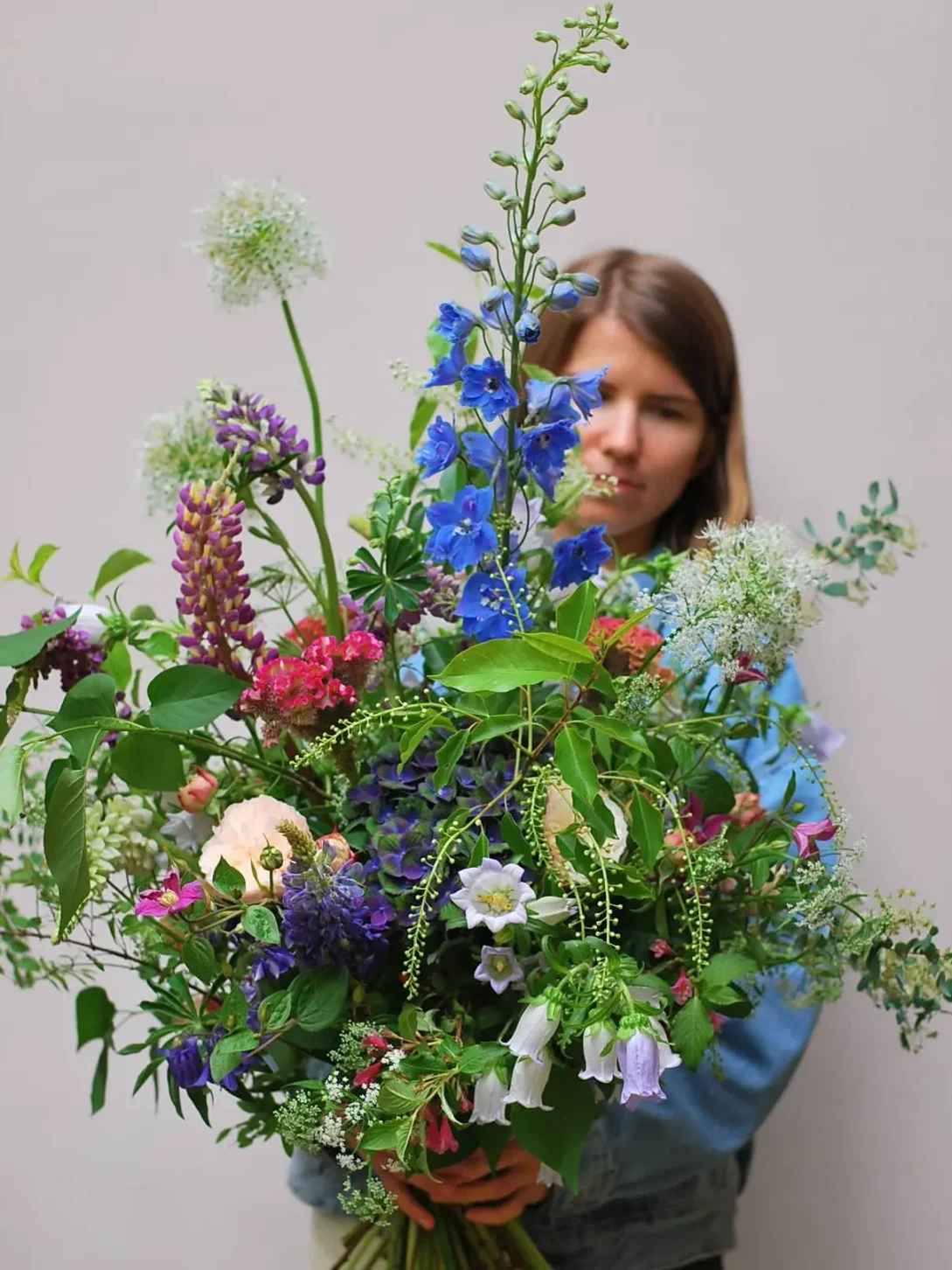
Asymmetrical style bouquet

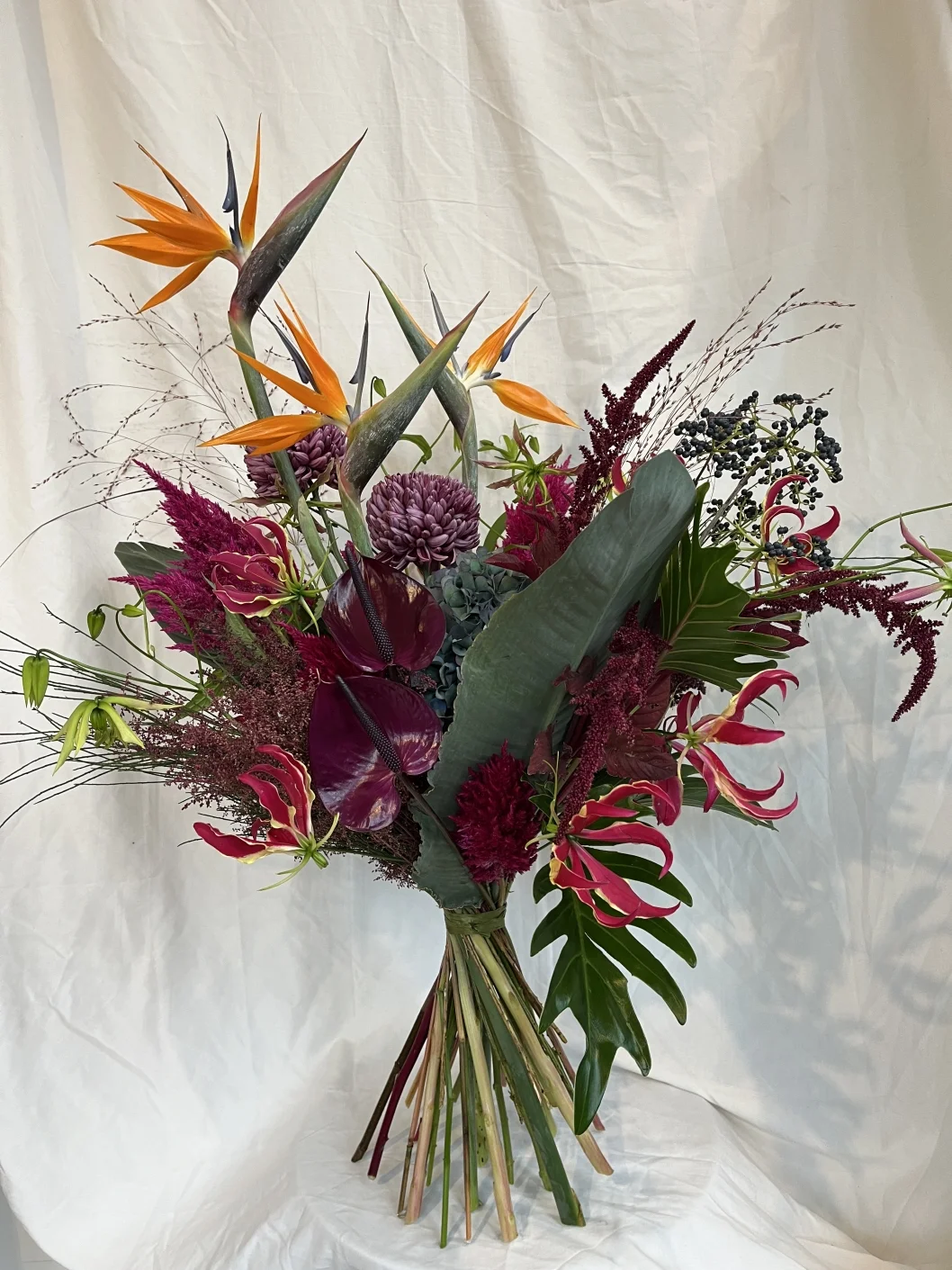
This is an exclusive proposal for those who appreciate originality, artistic style and lightness of composition. It can be a modern interior decoration in an arrangement with a stylish vase.

  • Irregular form - no perfect balance, one side of the bouquet may be longer or more spread out.
  • Open, loose construction - the bouquet is not tightly clustered and the individual elements can stick out slightly and create space.
  • Variable stem lengths - The longer and shorter elements create an impression of lightness and movement.
  • Modern and artistic style - the composition looks like a work of art rather than a classic, predictable bouquet.
  • Combining different shapes and textures - both large, showy flowers and small branches or dangling elements are used.

Boho style bouquet

This is an excellent choice for those who appreciate nature and freedom. The bouquet will look beautiful in a matching vase, giving your interior an artistic vibe.

  • Loose, asymmetrical layout - no rigid structure, the flowers are arranged in a natural and irregular way.
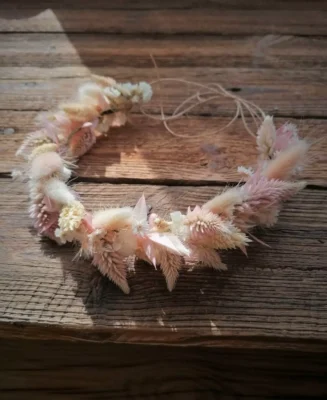
  • Combination of fresh and dried plants - The bouquet often contains grasses, eucalyptus, dried flowers and exotic leaves.
  • Pastel, earthy colours - dominated by shades of beige, brown, white, muted pink, maroon and broken green.
  • An abundance of textures - The combination of delicate petals, fluffy grasses and exotic leaves creates a multi-dimensional effect.
  • Natural additives - often tied with jute twine, linen or silk ribbon.

Summary

Personalising a bouquet is a great way to give it a personal and unique touch. It allows the flowers not only to be stunning in appearance, but also to tell a story to the person who receives them.

You can order a unique bouquet here Personalised bouquet

In the 'Notes' box, write out as many details as possible about the colour scheme, your favourite flowers and style. This will help us create a composition where the magic really sows.

lleaf

Recommended entries

florist road - blog

My path to becoming a florist - a story of passion and craftsmanship

The path to floristry is not always obvious. In this post, I talk about my first inspirations, artistic training and discovering a passion for working with flowers. This is the story of how art, craft and floristry came together in a profession that gives me joy and fulfilment.
Learn about the types of funeral compositions: bouquets, palms, wreaths, urn decorations and condolence bouquets.

Funeral floristry Katowice - a guide to compositions

Funeral floristry is a unique area of flower arranging art in which aesthetics are combined with symbolism and respect. Choosing the right composition - from a bouquet to a wreath or urn decoration - depends on many factors. In this article, we outline the most common forms of funeral floristry and their significance.